

What’s Working With YouTube Ads for Music
Last April, I detailed three strategies to get YouTube subscribers with ads. Since then I’ve added 11K subscribers, bringing me to 29K.
In the meantime, Google deprecated the campaign type I was using and disabled my retargeting audience.
When I saw John Gold of Hypeddit’s video, How I Got 22,000 YouTube Views for $18 (NEW 2025 Method), I thought to myself, “You know who isn’t getting 22,000 YouTube views for $18?”
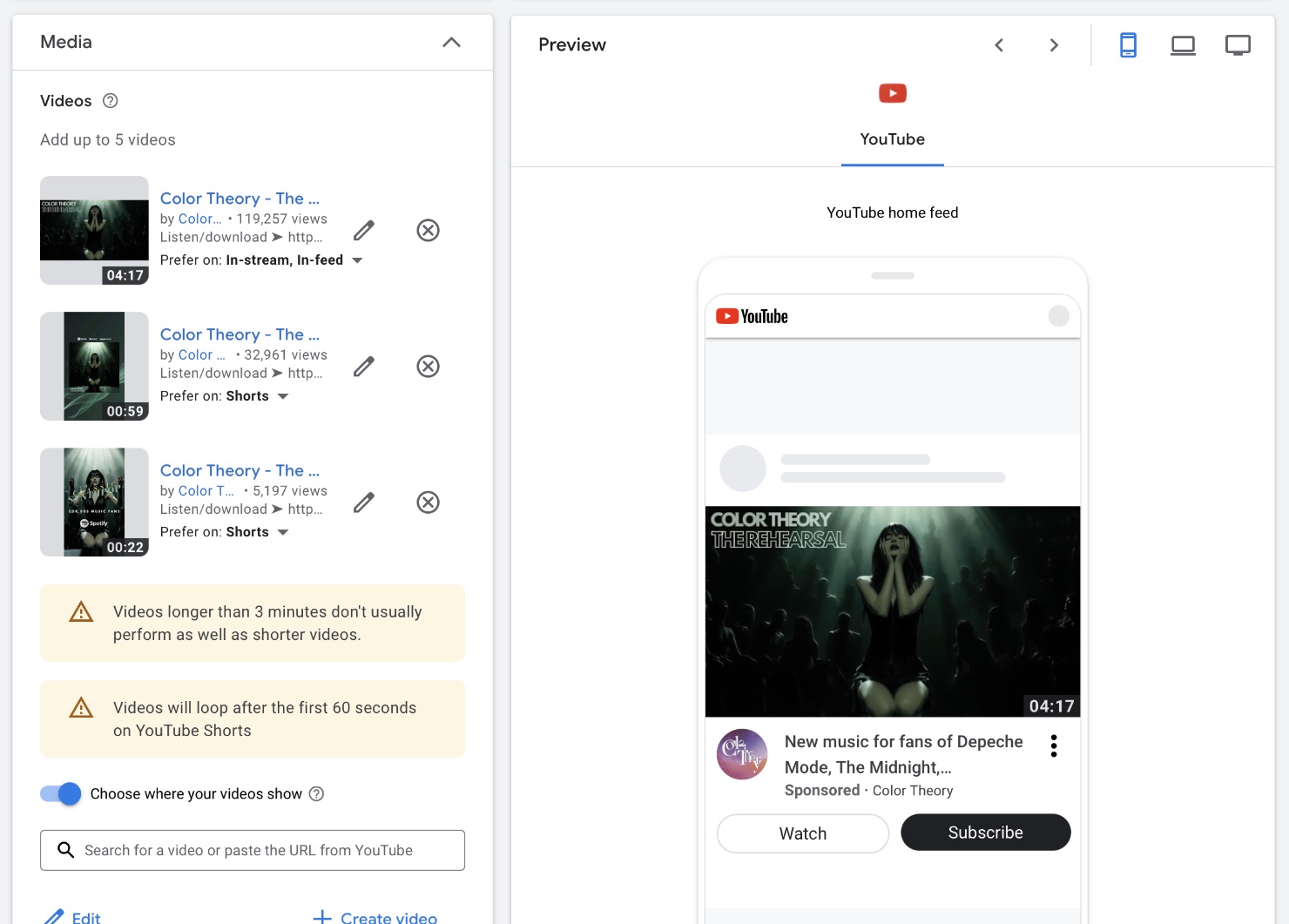
So I tried a Hypeddit “Grow my YouTube video” campaign, which couldn’t have been easier to set up.
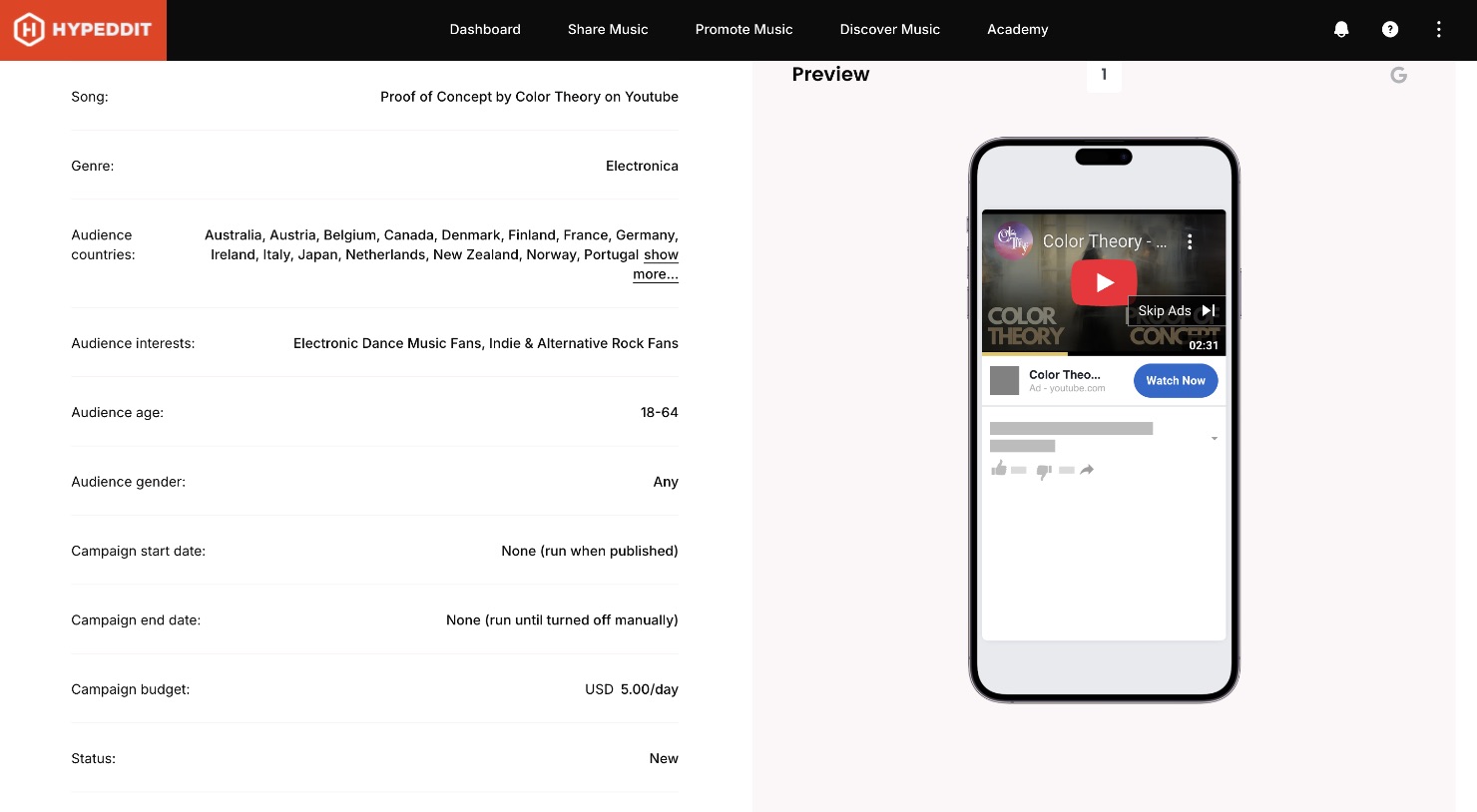
I created four campaigns at $5 per day: one to all countries, one to tier 1 and 2 countries, and two to tier 2 countries.
The campaign to all countries got similar results to John’s, netting nearly 10K views for $12 before I pulled the plug. You can click to enlarge any of these screenshots:

I also got 29 earned likes and 2829 earned views. So why did I pull the plug?
Here were the top countries:
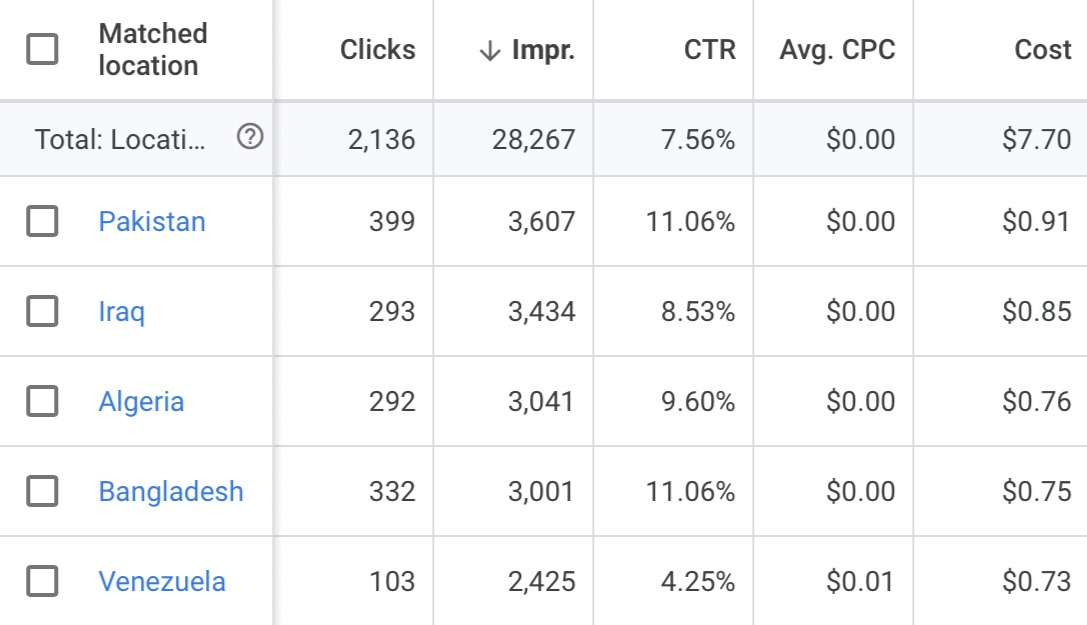
And here are the top YouTube channels where the ads appeared:
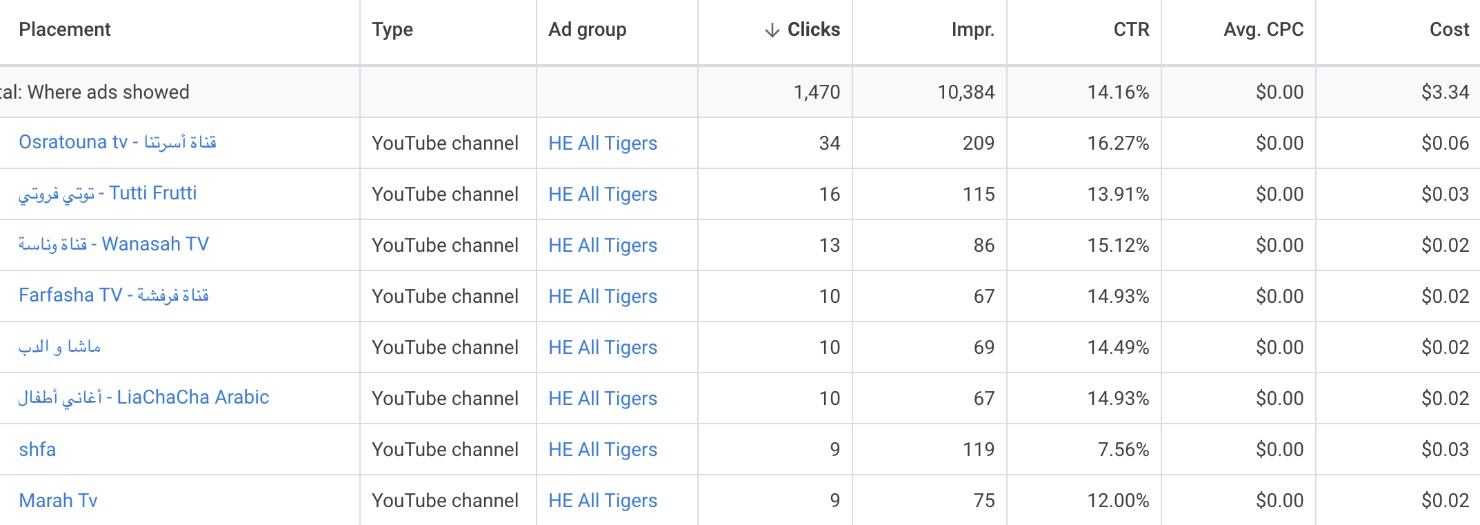
The age of the viewers is a mystery…
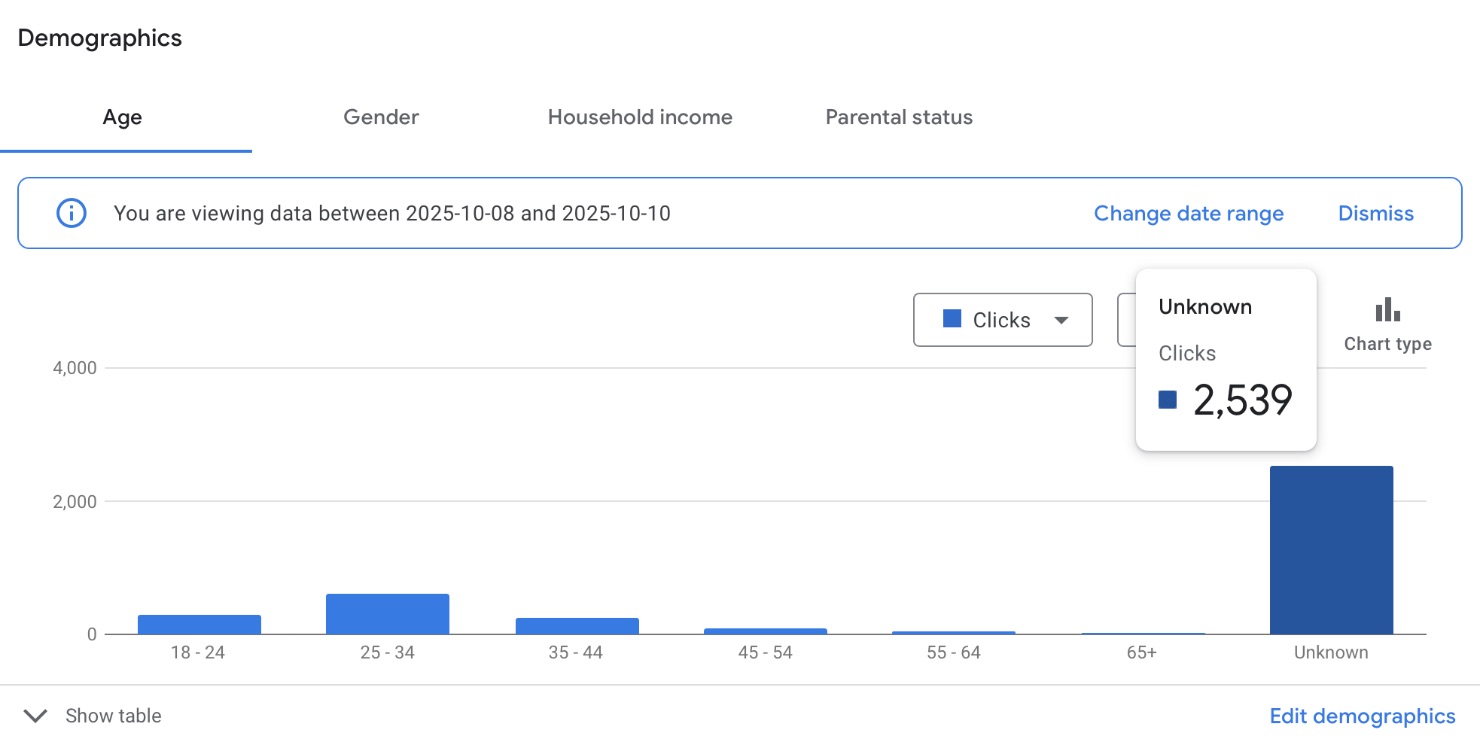
… until we click through to the channels my video appeared on. Here’s the top one:
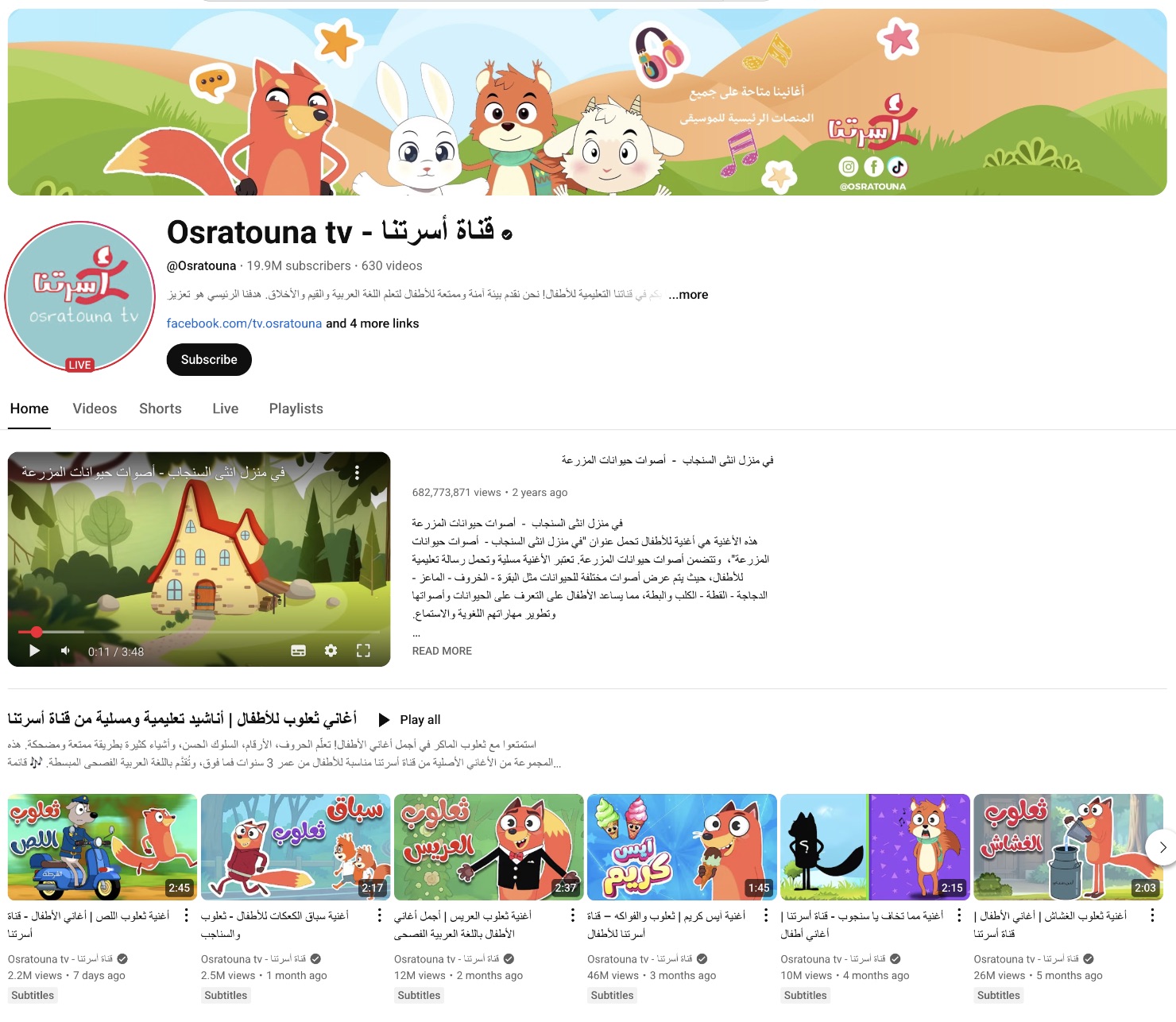
They’re basically all non-English kids channels.
To be fair, one can’t rule out the possibility that Pakistani preschoolers simply adore my music and will grow up to be my biggest fans.
The tier 1 and 2 campaign performed just as well, except now I was reaching kids in Peru and Colombia. My tier 1 campaign went out to children in Portugal, Spain, and Italy for 7-10x the cost.
Whether or not my videos will be recommended to non-English speaking children in the future is an open question. This sort of targeting would be suicide with the Spotify algorithm, but I really don’t know how it works on YouTube.
Here’s what our robot buddy Claude had to say about the 2829 earned views:
Those earned views are almost certainly non-human. They serve the fraudster’s goal of generating ad-revenue and inflating metrics for resale, not reaching real synthpop fans. To avoid this waste, exclude high-fraud regions altogether and focus budget on markets with proven, genuine fanbases.
For contrast, I spent $30 on my tier 1, highly targeted, longstanding subscription conversions campaign and got zero earned views for $30 over the same time period, while also getting 53 new subscribers and 45 earned likes.
I spoke with John about it and he’s since updated the “Grow my YouTube video” campaign. Here’s what he said:
After we chatted about the channel placements I updated the Hypeddit campaign settings. The setting that appeared to best eliminate channels with kids content was under optimized targeting ➤ only show ads to people within age and gender specifications. By default, Google Ads allow targeting outside the age/gender specs so this is now turned off. This update has been live since October 31.
For me there were still three kids channels showing up in “where ads showed”. But only with one to three impression each. And thinking back to the days when my girls were little, I can rationalize a handful of those views. I would watch Little Baby Bum with them every once in a while. It was my Youtube account. It was me selecting the videos. I watched the ads. So from YouTube’s perspective, I would have been the audience to target.
I haven’t tested out the updated campaign myself, but I can 100% confirm that enabling that setting virtually eliminates the kids channels.
My suggestion if you want to launch a Hypeddit campaign is to target no wider than tiers 1 and 2, because the cost per view to Peru and Colombia is about the same as to Pakistan and Iraq.
I spent the next month duplicating and tweaking those campaigns with the help of Google Ads Editor, testing everything I could think to test, spending $1100, and capturing screenshots every step of the way.
Rather than subject you to all that, I’m going to show you where I ended up, and how to get there if you’d like to replicate my campaign structure.
Here are my results in the 8 days since my last tweak (again, click to enlarge):
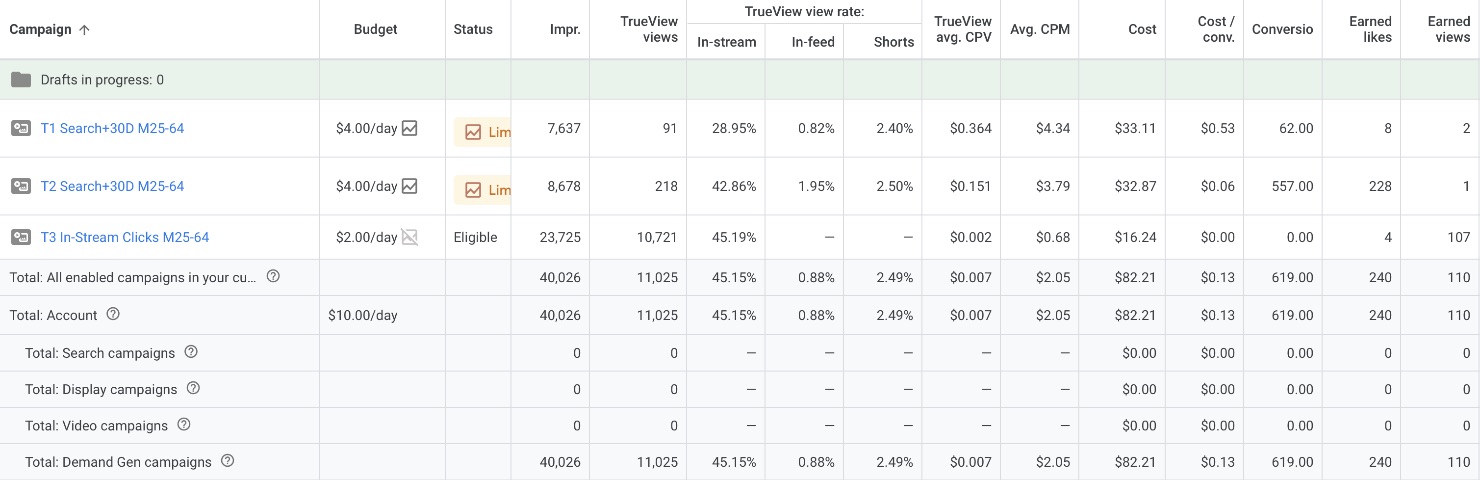
My tier 1 campaign includes the US, UK, and Canada only. For $33 I got 62 subscribers but only 91 views.
Beyond country targeting, my tier 2 campaign is identical. It’s mainly hitting Brazil and Mexico, and netted 557 subscribers at the same cost, plus 228 earned likes, at 218 views.
Somehow it did all that with only 15% more impressions. Are users in Brazil in Mexico that much more receptive to my music, all else being equal? I’m not sure what to make of it.
My tier 3 campaign is closer to my Hypeddit campaigns and mostly for social proof, netting me 11K views for $16.
It’s optimized for clicks instead of conversions (subscribers) and only runs in-stream. That’s the type of skippable ad that plays automatically when you just want to watch the damn video.
The key difference for all three campaigns is that my ads are only shown to men ages 25-64.
Now don’t get me wrong. I love women as much as the next guy, but most of my fans are men.
The tier 1 and 2 campaigns are pushing five songs, both the video and Shorts, wherever it thinks it can get the most conversions. The tier 3 campaign is just to boost the view count on my latest video.
Alrighty then, let’s see if we can’t recreate my tier 1 campaign from scratch!
YouTube Ads Campaign Creation
There’s a degree of setup required that I won’t be able to help you with, as I did it many years ago. At the very least, you’ll need to connect your Google Ads account to your YouTube channel.
Once you’re logged in to Google Ads, hit the multi-colored plus button in the upper left to create a new Campaign.
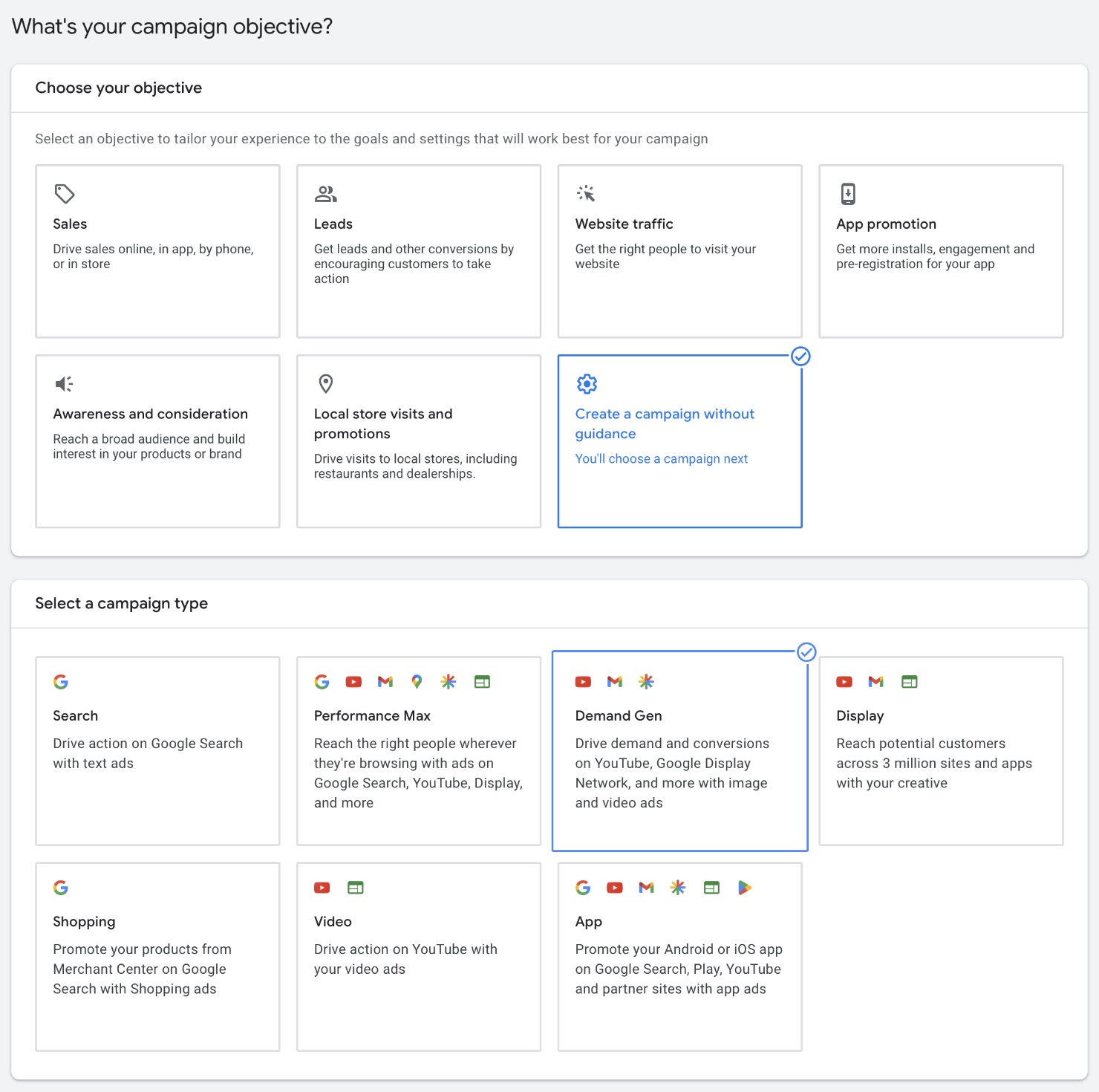
Select “Create a campaign without guidance” and then “Demand Gen.” You don’t have to select a conversion goal.
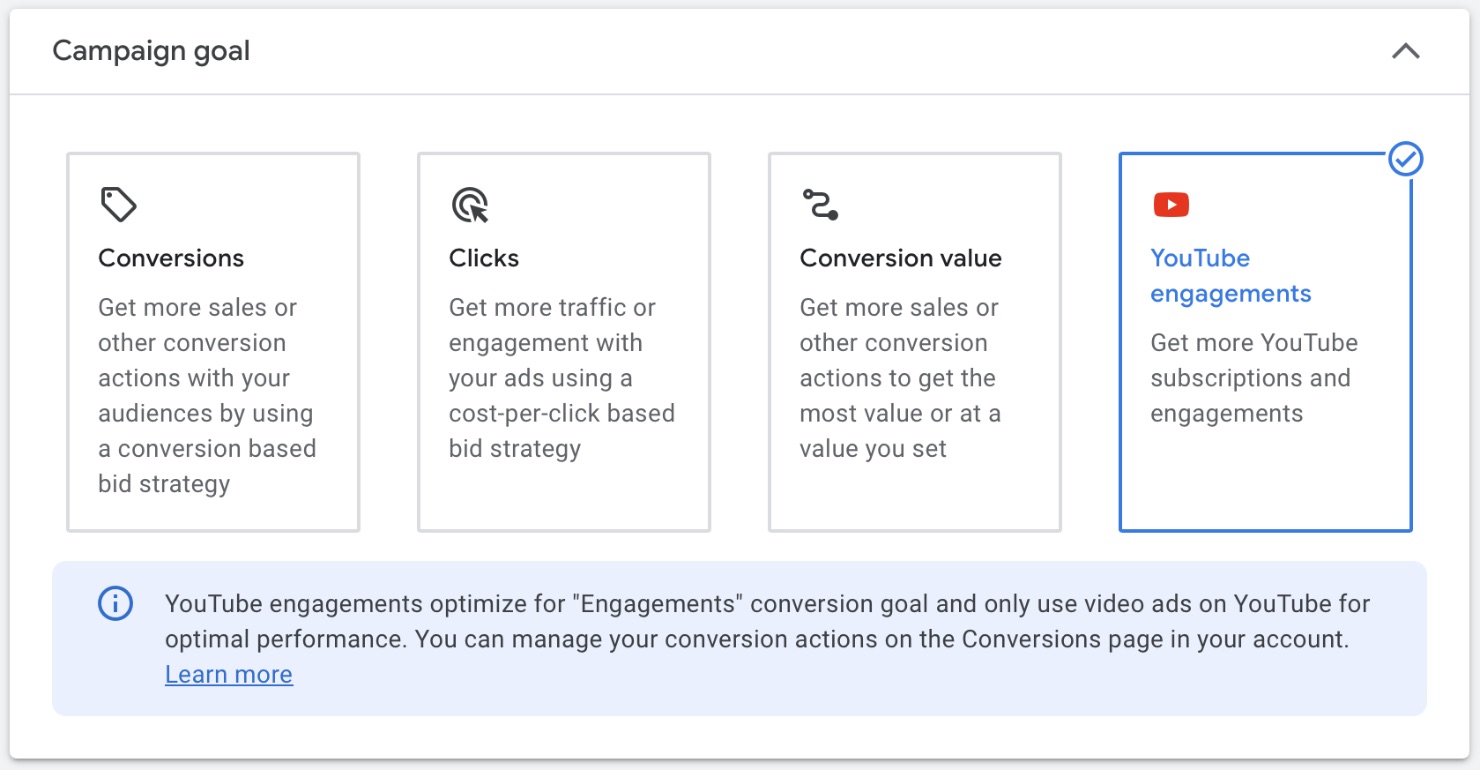
Enter a name for your campaign and select “YouTube engagements” as the campaign goal.
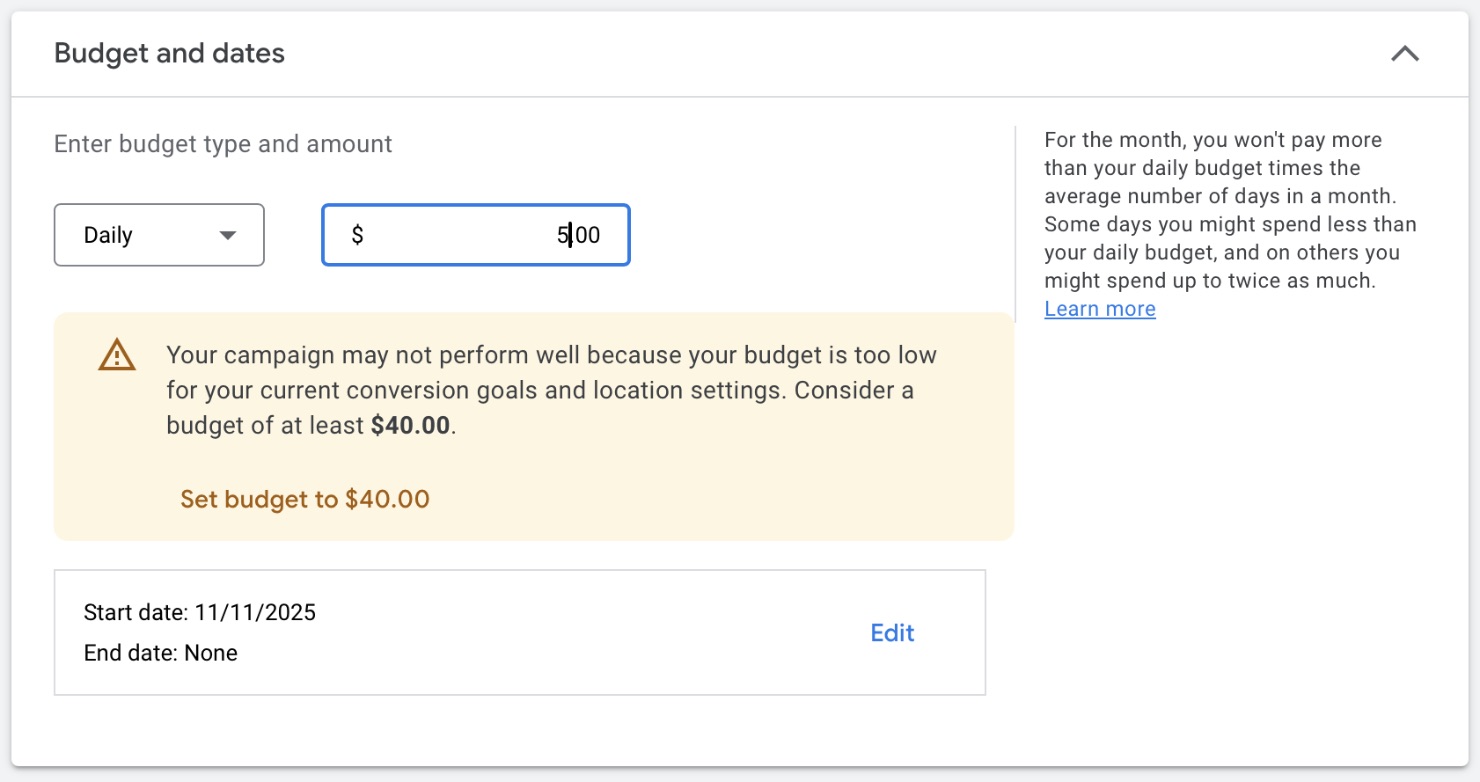
Enter your daily budget and disregard the shameless plea for more money.
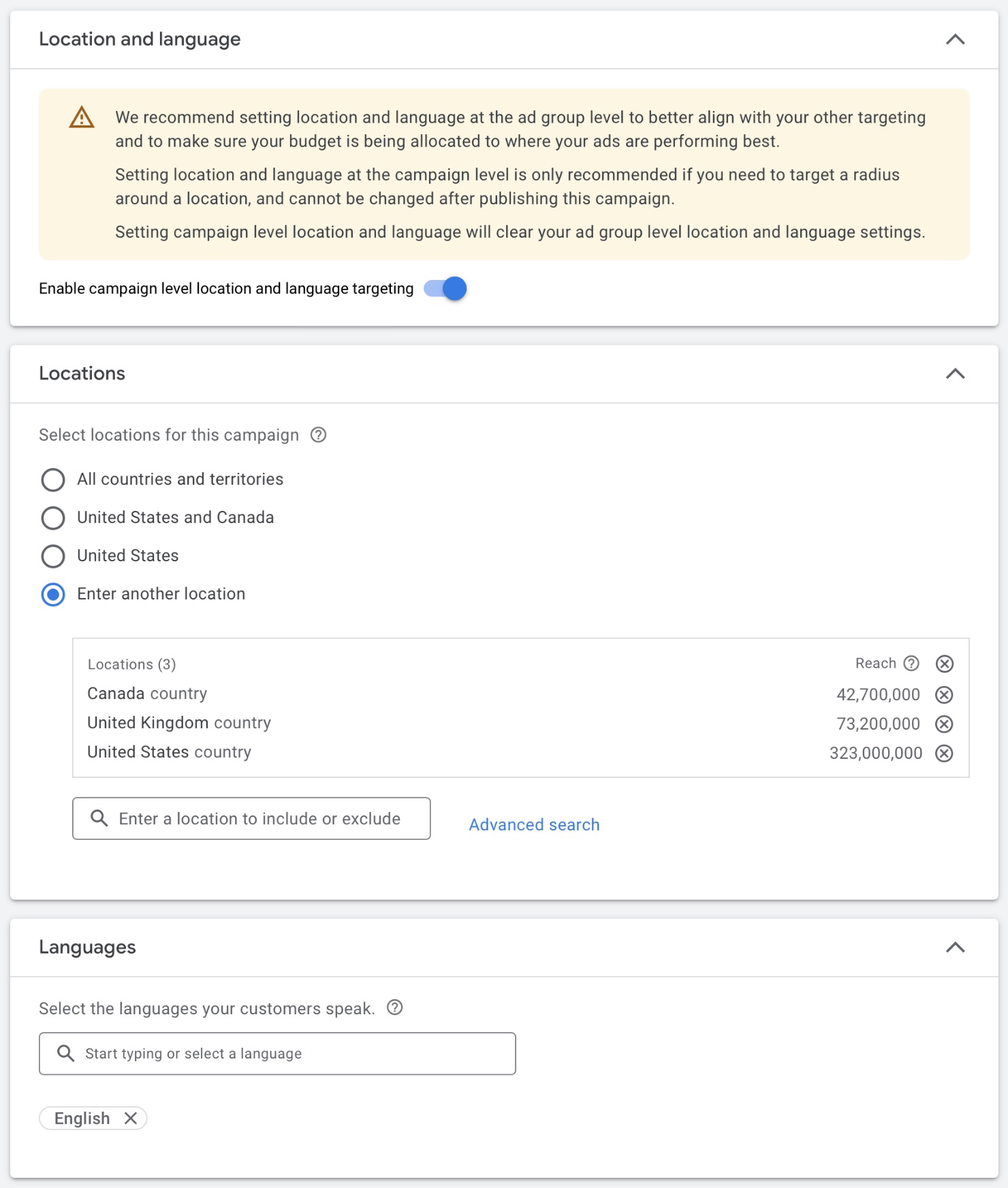
Apparently you can do this at the ad set level, but I set location and language here.
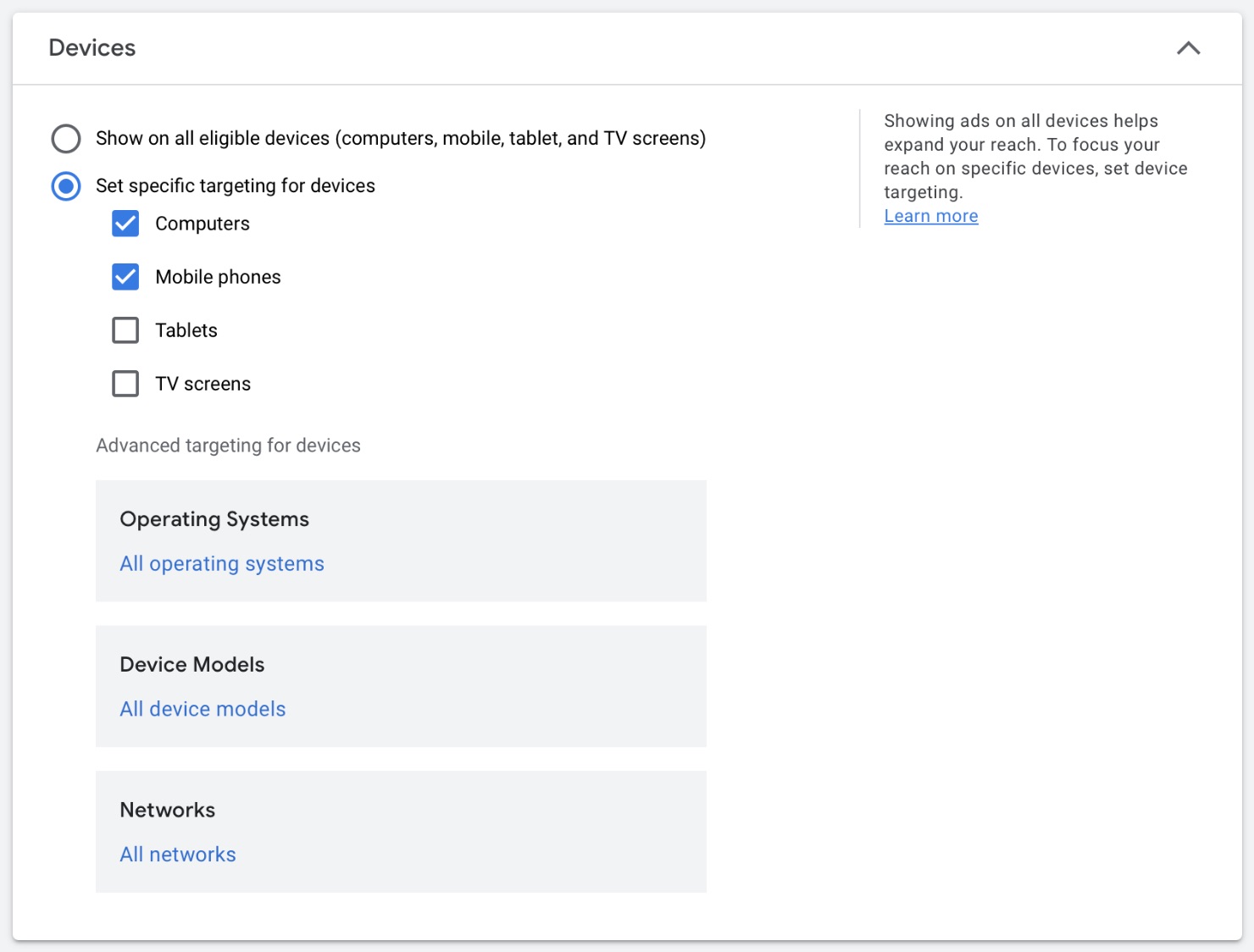
I’ve disallowed tablets, TV screens, and Windows users. I’m kidding on that last one.
The defaults should be okay for the rest, so we can move on to the ad group.
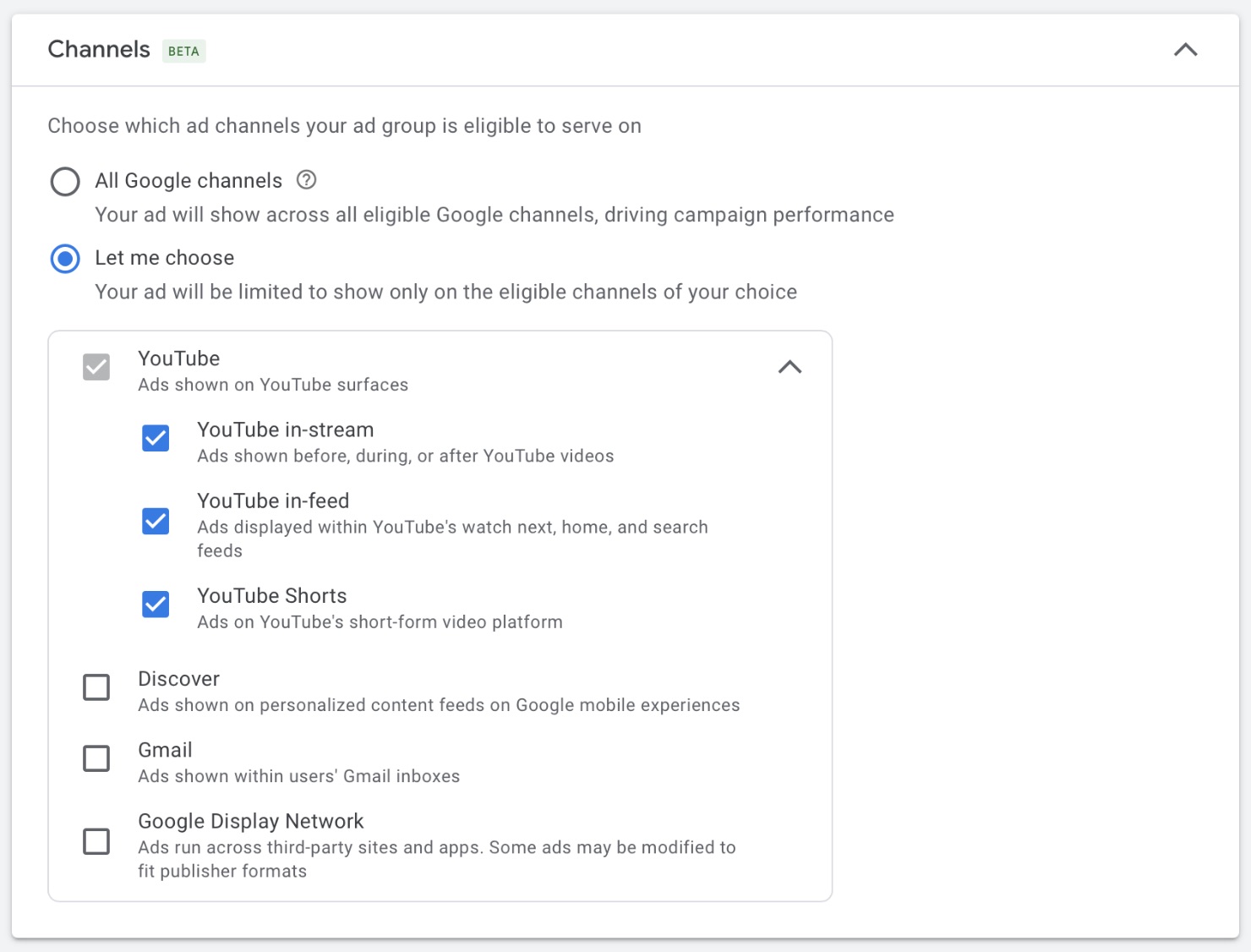
Name it whatever you’d like and restrict it to YouTube.
We’re going to have to create a new audience, so select “Add an audience” and “+ New Audience.”
Here’s what I’m doing:
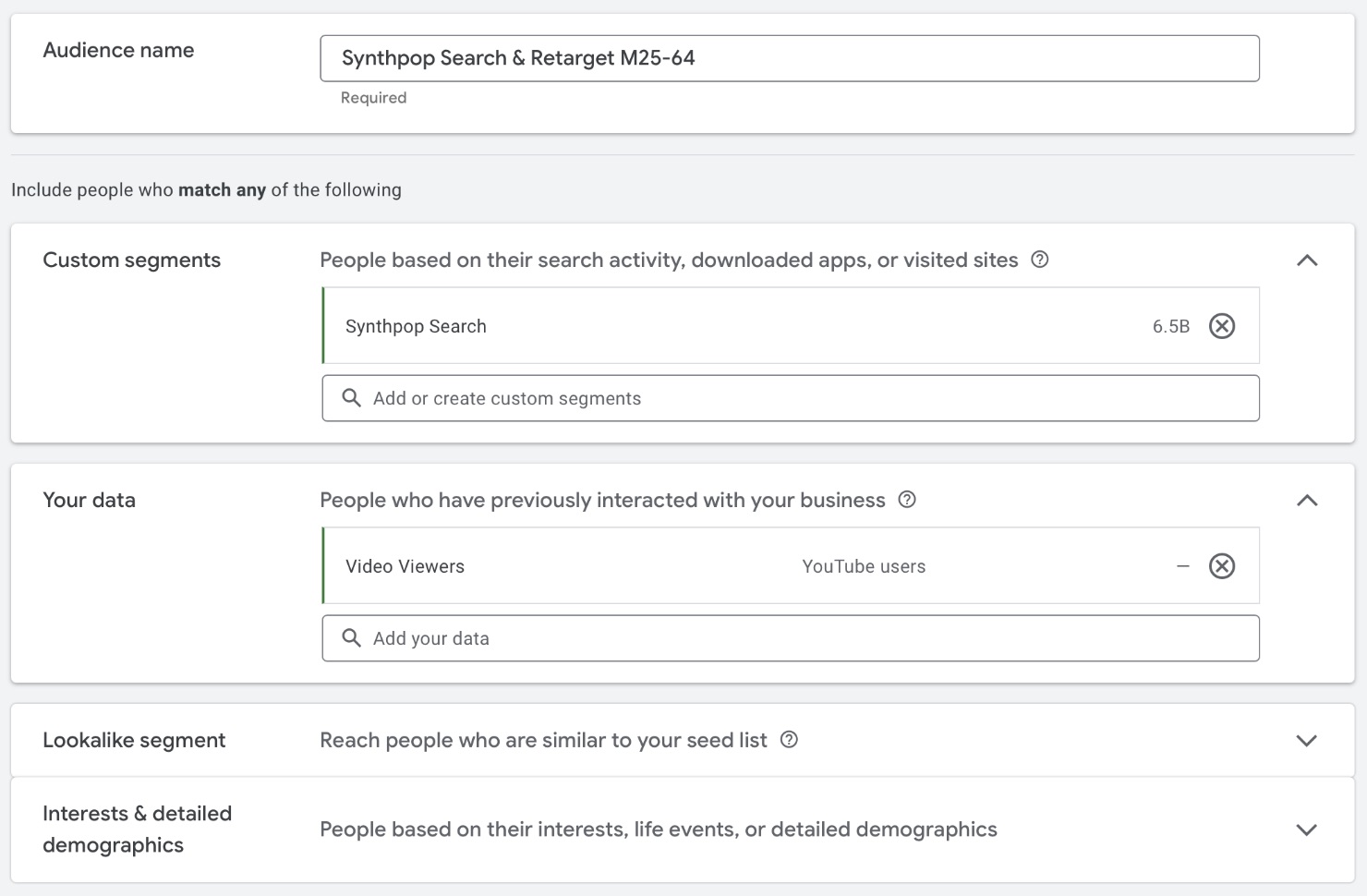
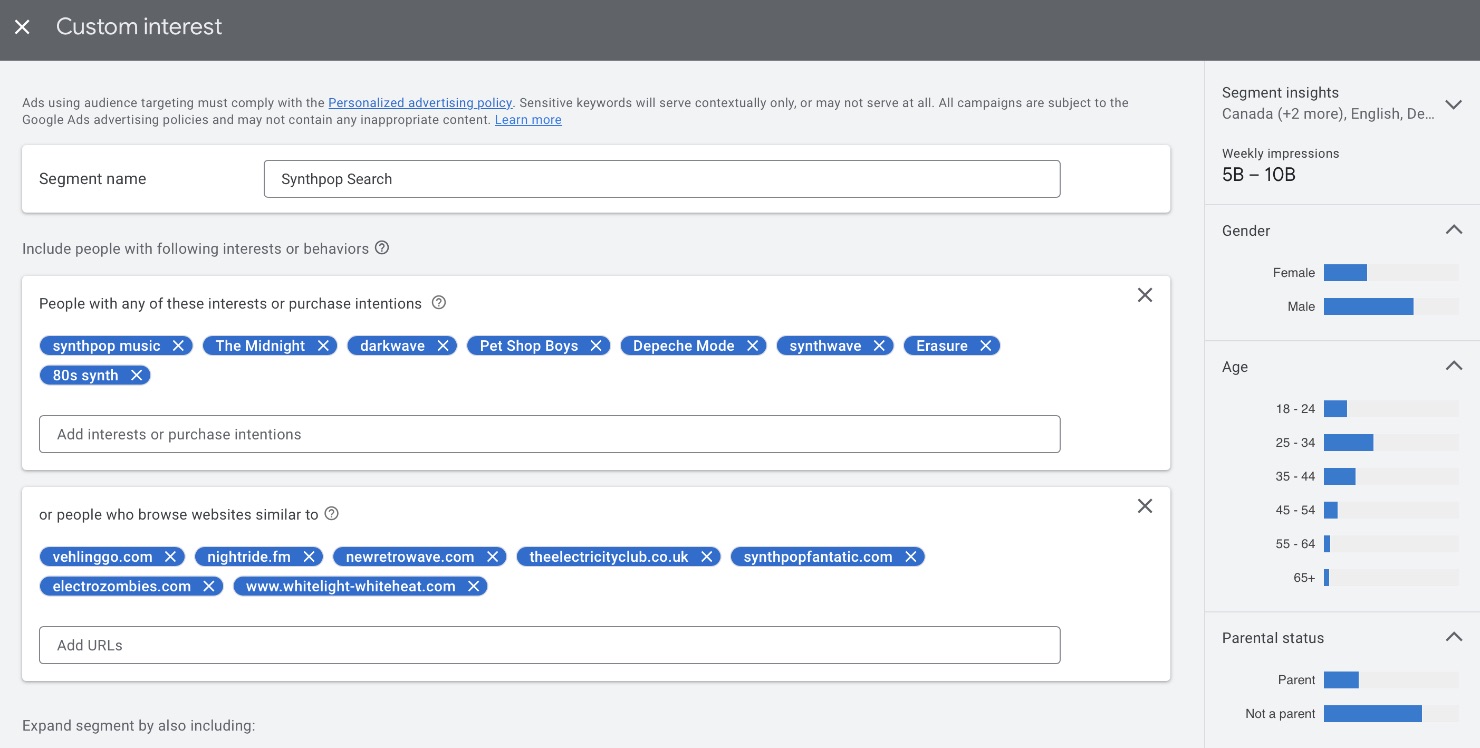
The custom segment is basically people who search terms related to, or visited websites related to, synthpop.
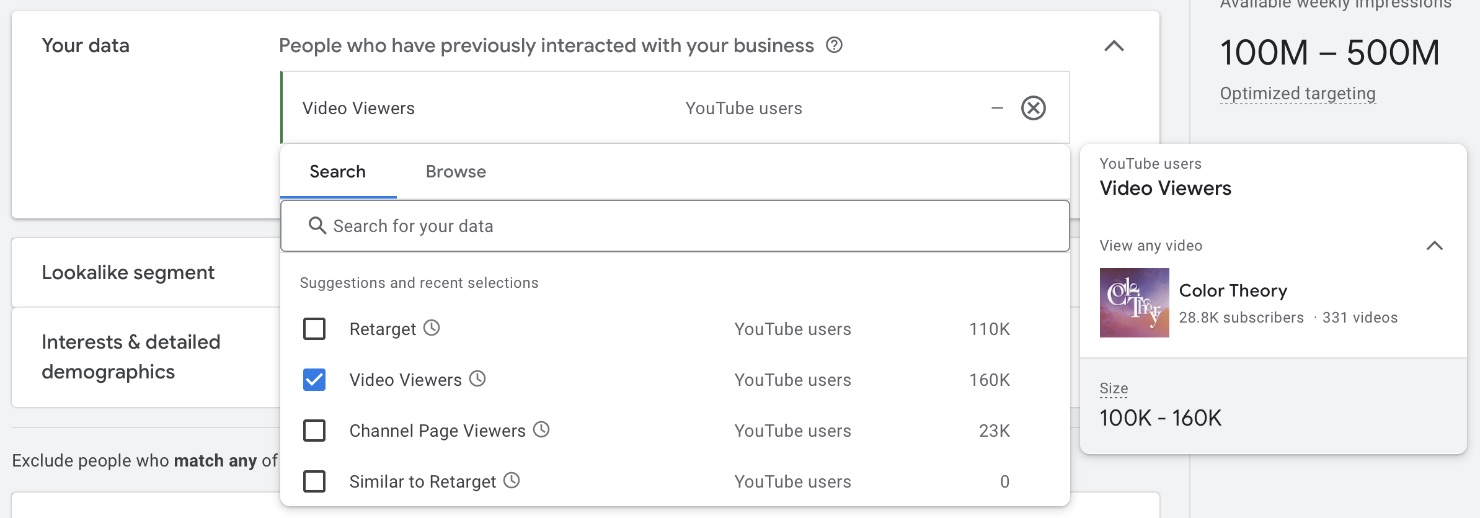
And the Your data section is just people who viewed any of my videos, so straight up retargeting. With any luck, a Video Viewers audience will be available to you in the dropdown menu:
As I mentioned earlier, I’ve restricted the campaign to men ages 25-54.
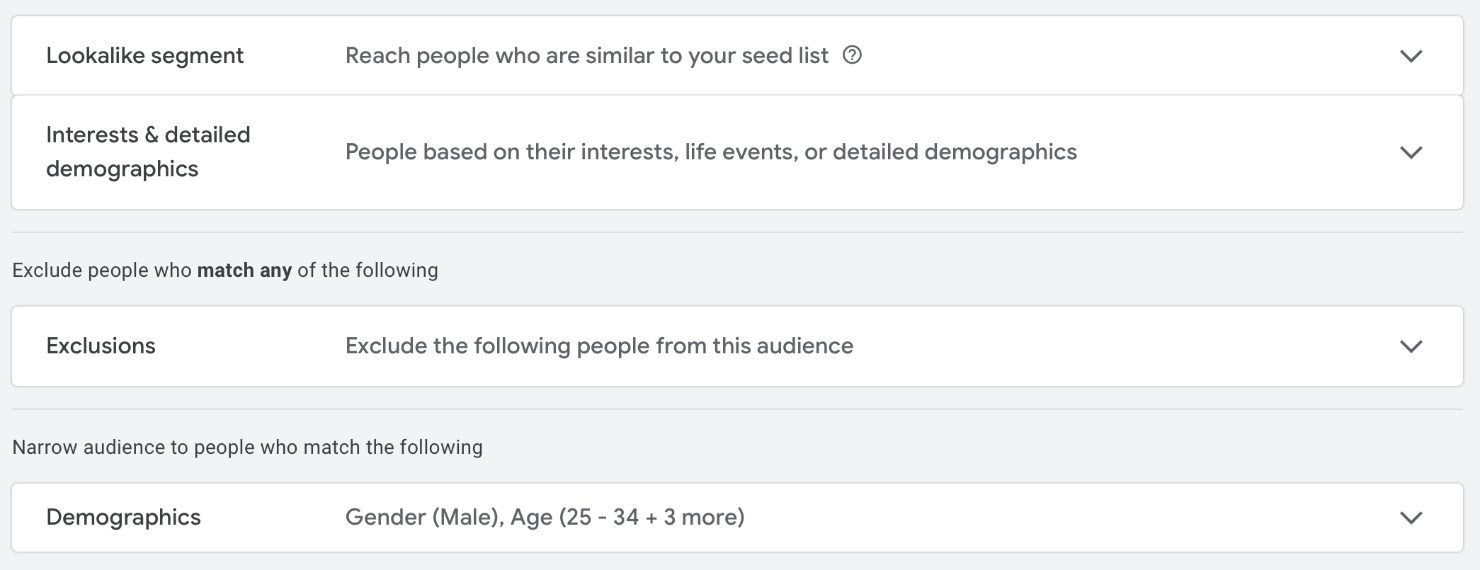
Last and MOST IMPORTANT: You need to enable “Only show ads to people within my age and gender specifications” or else your video will end up on kids channels.
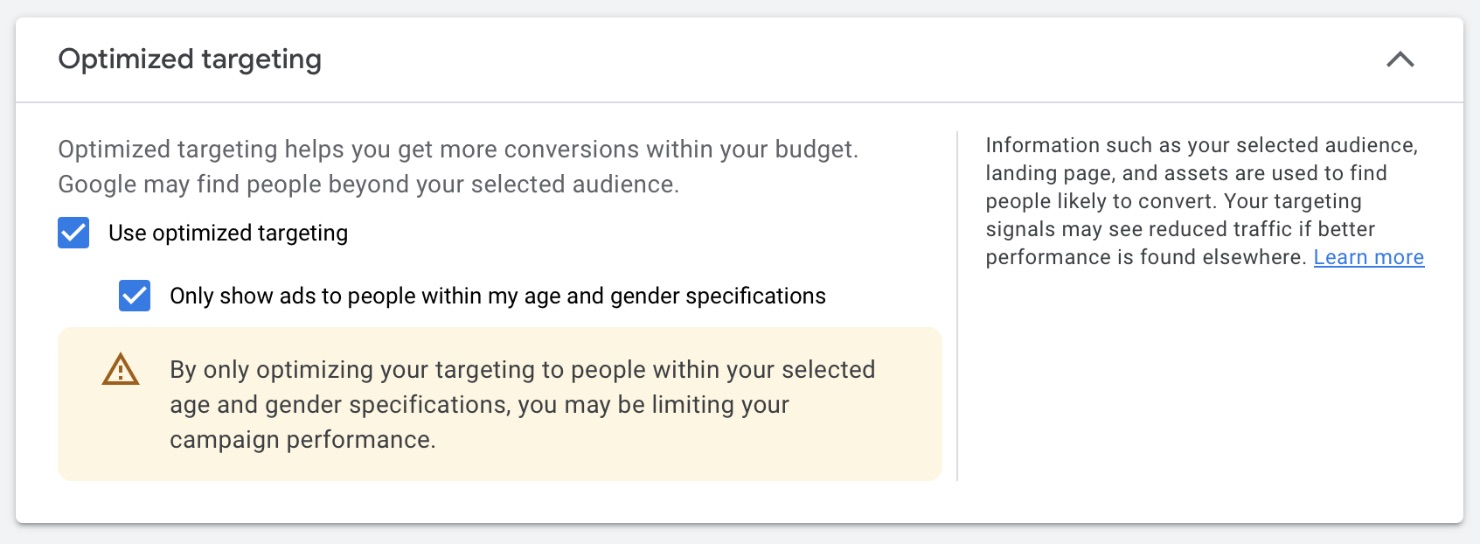
Or you could disable optimized targeting altogether, but I haven’t tested that yet.
UPDATE 11/21/25 – I tested it and my campaigns performed better by disabling optimized targeting completely. CPM went way up on my tier 1 campaign from $0.62 to $10.81, but I got more conversions (subscribers) at a lower cost per conversion ($0.45 down to $0.31).
Google also told John about another setting that we both have enabled. It’s under Tools ➤ Content Suitability ➤ Excluded Content Themes ➤ Content suitable for families.
Finally we have the ad (click to enlarge):
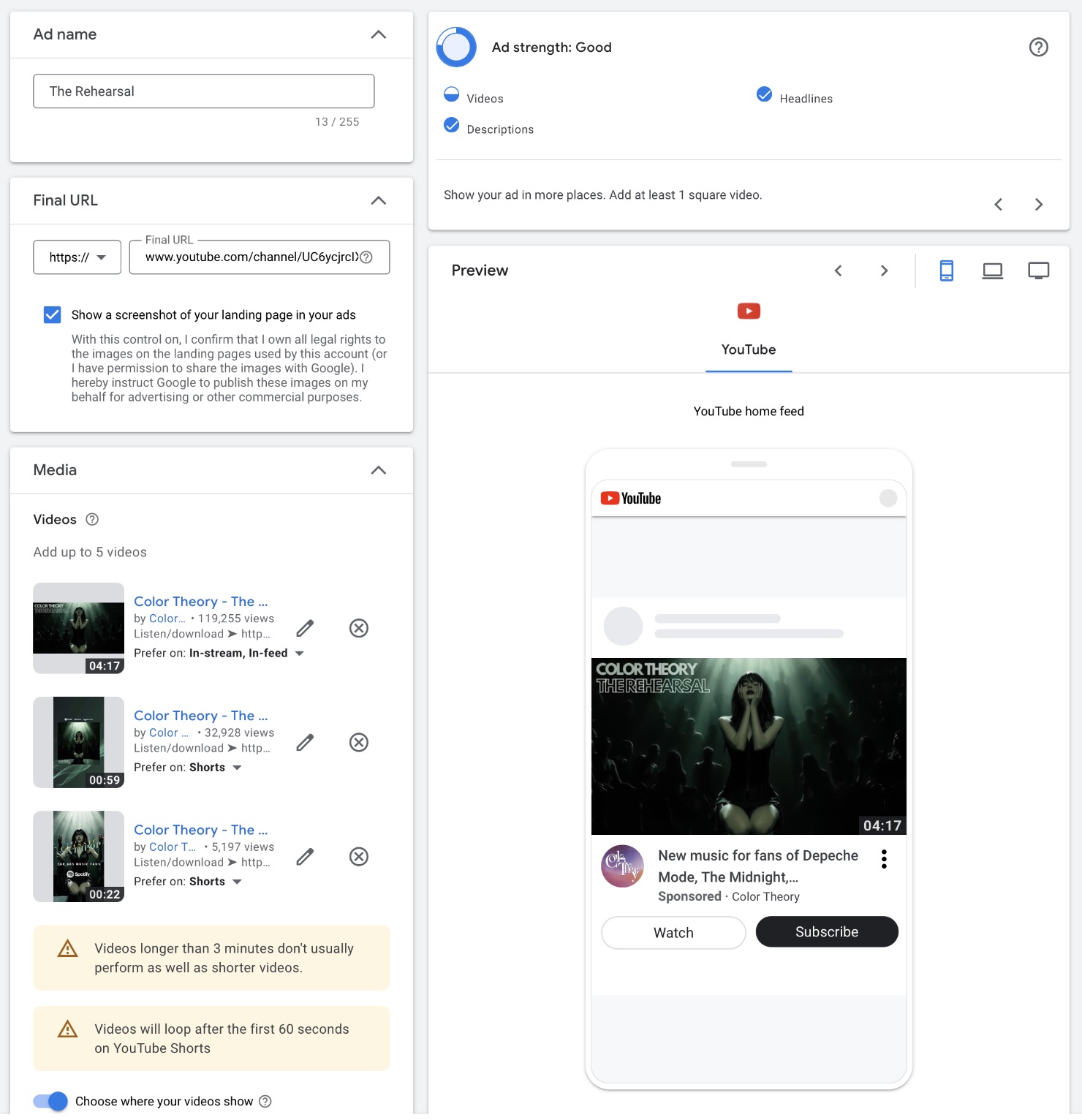
The final URL is my raw channel URL with ?sub_confirmation=1 tacked on the end, which brings up a “Confirm channel subscription” pop-up when clicked.
You can try it for yourself here:
www.youtube.com/channel/UC6ycjrcIXEbI4jsX9BhZ4_w?sub_confirmation=1
I’ve included three videos: the actual video for the song (which is just cover art), a one-minute clip of the song as a Short, and the winning ad from my Meta campaign as a Short.
I’ve added my logo, enabled resized and shorter videos, included a bunch of headlines and descriptions, and set the call to action to “Subscribe.”
I’ve also got four more ads, which are the same idea but different songs.
The idea is that Google can pick and choose which will best generate engagement, or more specifically conversions. For me that’s a subscription, but it may not be for you until you set it up.
When we selected the YouTube Engagements goal, we were presented with this text:
YouTube engagements optimize for “Engagements” conversion goal and only use video ads on YouTube for optimal performance. You can manage your conversion actions on the Conversions page in your account.
You’ll find the Engagement conversion goal under Goals ➤ Summary ➤ Engagement, then click Settings.
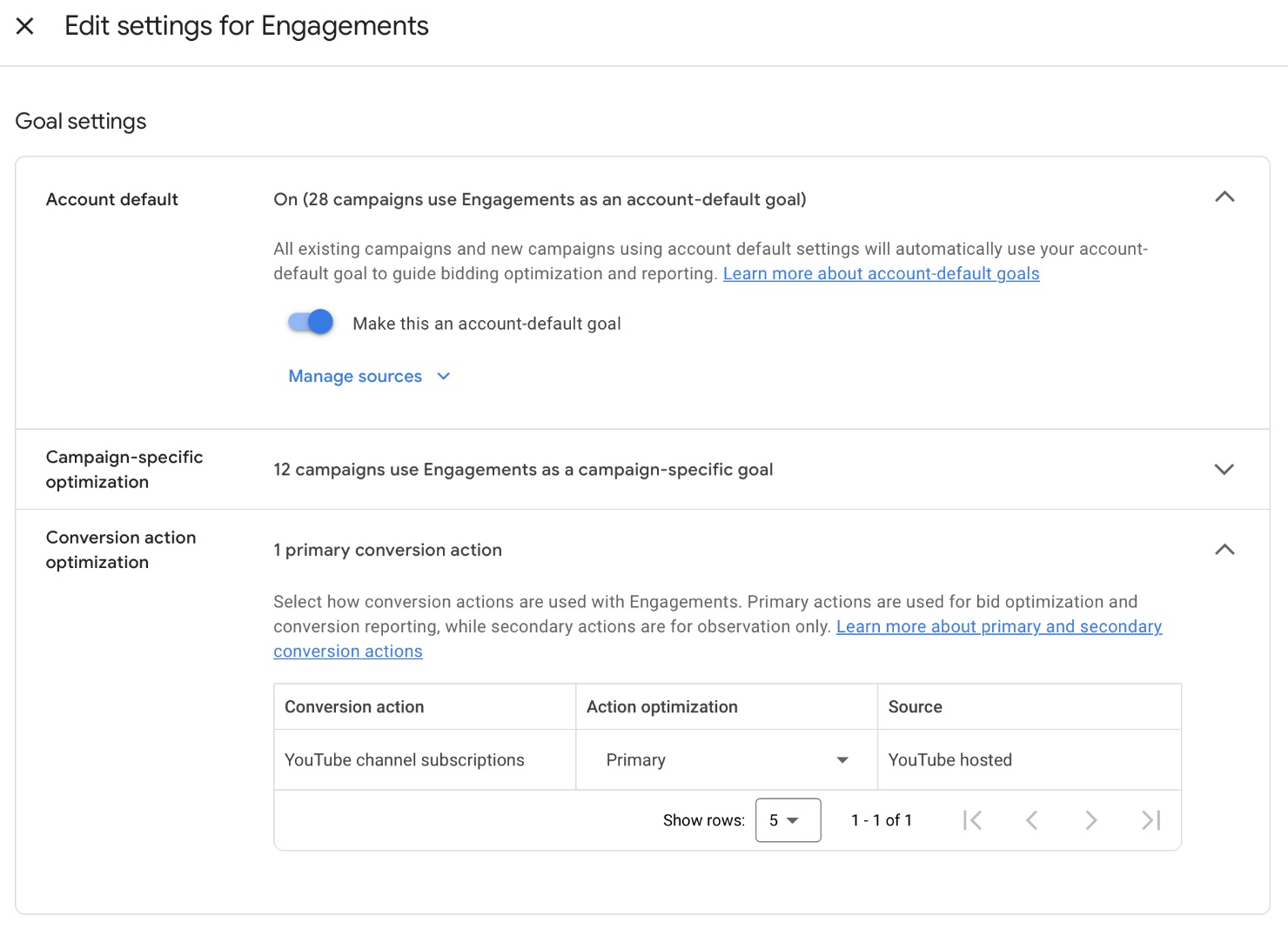
I set it as the account-default goal and my conversion action is channel subscriptions. If you’re not seeing the same thing, I’m guessing you’ll have to set it up on the previous page my selecting “+ Create conversion action.”
And that’s it for the tier 1 campaign!
My tier 2 campaign is identical other than the countries: Brazil, Mexico, Portugal. The latter is barely seeing any action so you might as well cut it.
My tier 3 campaign targets Peru, Argentina, Colombia, and Uruguay. Instead of “YouTube engagements,” the campaign goal is “Clicks.” Under ad set settings, channels is set to “YouTube in-stream” only. The ads themselves are just the main videos, no Shorts.
The tier 3 campaign is primarily for social proof, but it only reaches the demographics I selected, who at least have the potential of becoming genuine fans. You can expect 600-700 views for $1.
Though I’m happy with my campaigns, I’m sure that my settings aren’t 100% optimal. I’m open to suggestions!
Did I miss anything? Do things look different on your end? Please let me know where my guidance could be more clear and helpful!
Very interesting… I’m always wondering why Google, Meta,… all don’t do anything about those click farms/bots. Of course we spend money even for those farms, but maybe we would spend more if everything was blocked from their end…
Did you already try some tools like ClickPatrol, ClickCease, ClickGuard,… which are supposed to block such traffic?
I hadn’t heard of those tools but my cursory research suggestions they won’t help much, perhaps a little more with Google Ads. I can’t conceive of how they might actually work, because it seems like they would need to integrate a security layer between the ads services and the end user.
I’d wager we’re better off just staying away from high-fraud countries, where I’m unlikely to find real fans, of my music anyway.
I’ve followed your stuff for a while, and I spent a fair bit of time trying to claw my way into marketing some recognition for my music, but also realised it’s a full time job. Your comment in the email drew me in this time because I feel it.
The entire streaming music industry runs on algo bots now and is a criminal theft market. Its a complete waste of time trying to get anywhere and hardly surprising because its encouraged and people engage in the system, so they make more money and drive it harder in that direction. Its works (for them). Maybe as more people realise it, they will stop spending money to encourage it.
If you make money back doing it, its because you have become a “marketing expert” in a highly competitive and skilled market that mostly targets “paying” bots. But once you reach that lofty achievement, you are a marketing expert, and no longer a musician. That is the fundamental issue with all of this. And why I no longer engage in it.
What irks me is I have this year managed to organically grow my YT channel that is purely real people and I dont advertise at all other than directly to those people who are interested in my subject focus. But I havent reach monetization stage, though I might get close, the hours of play required, more than the subscribers, will be the issue. I’m also not sure I trust it not to rug-pull me later, another trick YT loves to employ.
But I use my music in the background of all videos, and though it doesnt net much, it was inspiring me to continue. However, I just got contentID white-listed on that channel and wont be able to claim copytight on my own music there. Why? Because I found out YT wont pay for those plays, because its my own channel, and it isnt monetized by them.
All in all the entire industry is the pirate. Its now a system designed to rob the independants of their copyright money, thus making them pay for advertising, that is mostly a scam when you find out who it is targetting. And that is why you are seeing less and less people interested in engaging in it. Why would we bother, once we see behind the curtain?
I’d rather be making music. Or in my case, music to go with my AI shorts films which also wont get anywhere but I will enjoy making. That is the world we now live in.
Mark DK Berry
For context, here’s what I said in that email, for those who aren’t subscribed. I’m referring to Passive Promotion:
First off, congratulations on growing your YouTube channel organically. I’m sure that was a ton of work! I don’t suppose ad views count towards that hourly minimum or you could just do a cheap Hypeddit campaign and get there in no time. I get a $100 payment every few months. Nothing to write home about!
I consider myself pretty jaded, but I still feel like there’s never been a better time to make music as an independent. Assuming your music meets professional standards, you can spend a few hundred dollars to promote it, and if listeners respond on Spotify, the algorithm can take it the rest of the way.
Which is why I’m becoming more mindful of the time spent writing these posts, which could be devoted to improving the quality of my music. But normally I’m only good for one a month, so it’s really not that big a deal and I should just stop complaining. 🙂
Though I’d love to get more into AI filmmaking! I’ve been keeping up with Theoretically Media on YouTube and enjoy watching his videos on the various tools and techniques. It looks fun!
Purely organic build. Caught me by surprise, tbh. I only really thought about it when the missus pointed out that the speed it was growing was not to be ignored. She is more business minded.
but its not drawing attention because of the music, it is because its AI, and I have been sharing stuff for free as I research it, so its attracted attention. I just threw my music on the vidoes, because I realised it might help drive plays, but as I said, got caught out by Google’s ToS.
I think finding our niche is quite a large part of it too. I am getting a better handle on why I have never had success with music directly, but often had success in areas around music that involve it.
It’s leading me more into a path where I can enjoy my passion for making music, by applying it to making AI shorts. Or something like that. It’s still a WIP. I’ll spend the next period of time developing a process to keep driving attention toward my YT channel, while trying to find time to stay creative.
Finding the happy balance is difficult, I love making music, while also keeping on top of managing everything around it. And all the while needing money to survive, of course.
AI has a way to go yet, but it will get there. My grand plan is to make a full AI movie and score it.
It sounds like the YouTube channel is ground zero for your efforts, however they end up manifesting. You may not have nailed down your musical genre but clearly you’ve found a niche audience there who appreciates what you do.
I suppose you could make a full AI movie now but it would cost a few grand in credits. And of course it would be tempting to score it with AI too. At least nobody would complain about AI music in that context! 😉
Hi Brian
I almost typed ‘Hi John’ there, I was stilling thinking of John Gold, who I also use. I agree with some of what Mark DK Berry says, marketing oneself is a full time job. It’s soul sucking. I did a lot of it for my first album. And the amount of work you yourself put into your campaign, taking screen shots and reporting back on it. I appreciate it! I found it hard to read, all the way down, though.
I am about to release my second album but hadn’t yet given thought to promotion. It seems to me that Legacy Media is still very important to get traction. It may be different for me as I live in Ireland and getting some national exposure here via radio / newspapers should be within reach.
I was intrigued by your comment, “…traffic and more importantly comments just aren’t what they used to be”. Have they gotten worse on YT?
I haven’t run FB ads to Spotify now in over a year. My monthly listener count has dropped steadily over the course of the last 15 months or so from a high of 11,500 to about 2,500 today. I don’t believe my lack of ads is directly related to it, but presumably it is a factor. Most of my streams came from Spotify Radio, and it has declined very gradually, no big drop. I wondered if that was unusual, or is it a feature among independent artists.
Thanks for all you do,
Best,
Joe
Hiya Joe – c’mere, I live in Ireland too, and if you’re interested in legacy media I recommend having a chat with Sheena in Amplify Agency in advance of releasing your album. I released one during the summer and booked a consultation with her, and she had some real interesting stuff to say … but alas the album was already out and mostly legacy media is interested in stuff that’s about to happen rather than stuff that happened in the past. You can book a one-hour consultation with her on the Amplify website
Thanks man!
I’m not convinced of the value of legacy media, but I could be wrong! I’ve had bad experiences promoting to radio, though I’d love to get my music on Sirius XM if I could figure out how. I think once I sent a CD and never heard a peep.
That email quote is referring to Passive Promotion, not YouTube. I used to get a lot more traffic and engagement, which I can’t definitively blame AI for, but why click through to the post when Google gives you the tldr right in search?
Unless your ads were a total fail, they certainly influenced your monthly listener count along with your Radio plays. Then there’s your release schedule. You can expect streams to gradually decline for every release unless you’re doing something to actively promote it. To grow, you need to keep releasing new music, ideally every 4-6 weeks, but even every 3 if you can keep the quality up.
Oh yeah, let me know if there’s anything I can do to make the post more readable. Maybe you just meant it was overwhelming, to which I’d have to agree!
I can’t thank you enough for this!! I need to go over this post again with a fine toothed comb. Great info!
My pleasure! Let me know where it could be clearer!
Hey Brian- thanks for sharing your knowledge, experiments and results. I appreciate your sense of community with other independent artists.
I read some of the other artists’ comments about feeling exasperated by having to learn marketing. That sense of frustration, while understandable, is non-productive for them. I would like to offer some “indie medication” to my frustrated comrades that will zen them out! Ready to swallow 3 pills and feel like the artist you really are?
Pill # 1: If you are an indie artist does not enjoy spending time learning and engaging in marketing, then you should redefine the scope of your musical ambition. You can find contentment in creating music and sharing it with only your closest friends.
Pill # 2: Being an indie artist is about creating music, sharing your art, and not expecting to successfully monetize. Look at the big picture regarding monetization of releases in the music business. Q1: What is the monetization success rate for releases on well-funded independent labels? A1: Shockingly low. Q2: What is the monetization success rate for releases on major labels? A2: Shockingly low. So why would an indie artist feel they can “out-market” or “out-perform” business models that have resources indie artists could only dream of?
Pill #3: Align the scope of your musical ambition to what is tactically achievable: you can build an underground fanbase that appreciates your music. Brian & John’s marketing suggestions can turn your small budget into a small fanbase that appreciates your music. And that is success in the independent music world.
Thanks for the reality check Dave! That’s quality stuff. And the nice thing is, there’s always a chance something could really take off!
Hi Brian – Thanks so much for posting this! What is you thought process behind optimizing for clicks on your T3 campaign versus optimizing for conversions on your T1 & T2 campaigns?
Great question Dave! I should’ve clarified.
That T3 campaign, which I’ve got running at $1/day, is mainly for social proof, so I’m looking for the lowest cost per view.
Over the past 7 days, I’ve gotten 14K views, so 2K views per dollar! If I set it to conversions, I’d get far fewer views, but maybe more subscribers. Historically I haven’t seen much genuine fandom from tier 3 countries.